

The Story of Curious & Curated, in Haley and Simon's Own Words
Some projects are best told through the design decisions. This one is better told through the people.
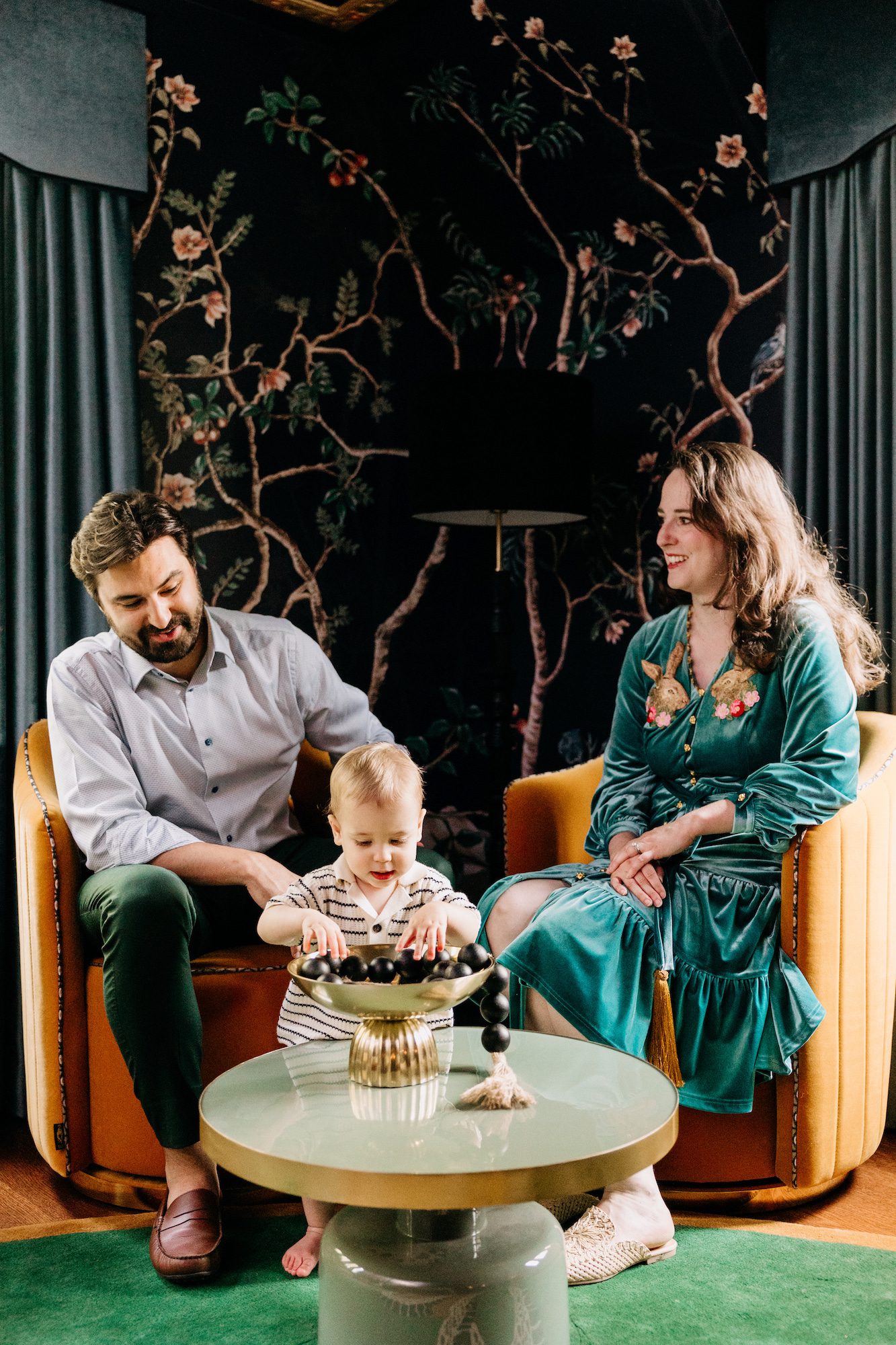
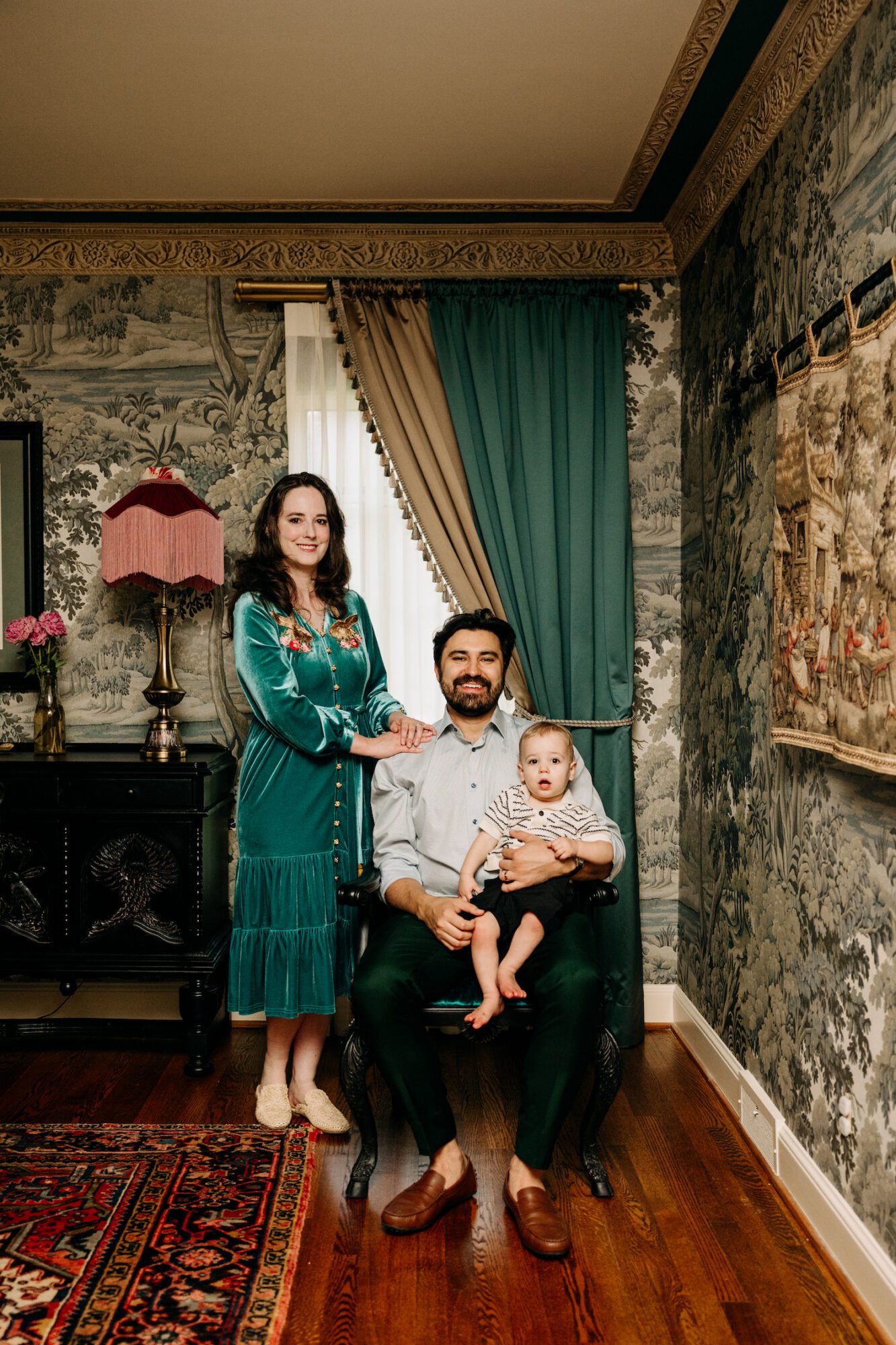
Haley Sibley is an otolaryngologist who specializes in voice, swallowing, and airway disorders. Some days she's in clinic, some days she's in the operating room, and occasionally her job involves taking call at the opera house. Simon Shirazi is an automotive engineer who spends his time planning advanced driver-assist features for Toyota's next generation of vehicles, when he isn't in a car on a test track or on a plane to Japan. “We both have very dynamic jobs,” they said, which might be the understatement of the whole project.
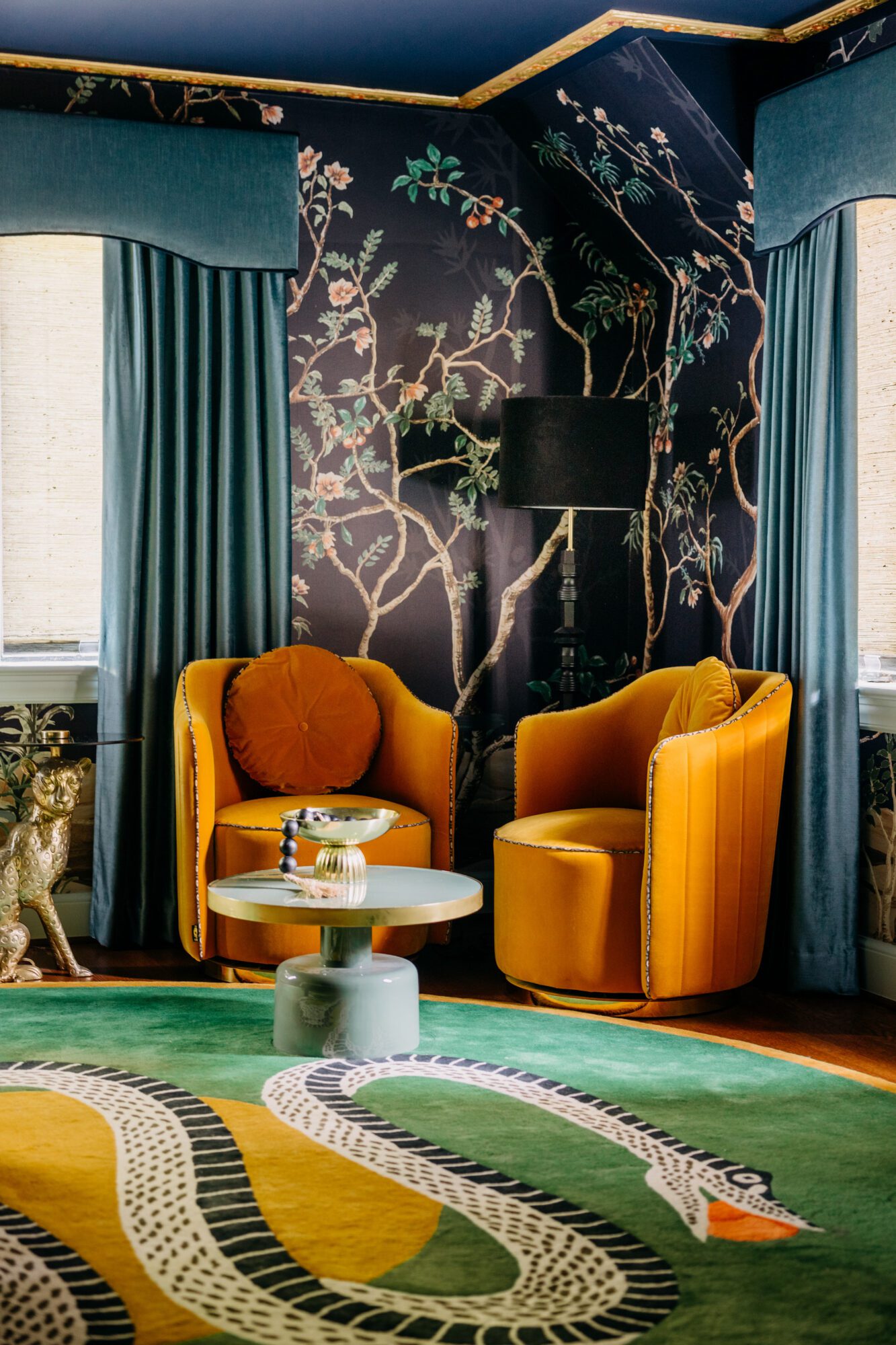
Neither of their careers has anything to do with skulls, tarot cards, or Flemish tapestries. And yet, walk through their 1934 Tudor Revival in Palmer Woods, and that's exactly what you'll find. The story of how a house this precise in its history became a home this expressive in its personality starts, fittingly, with an accident.
The House That Found Them First
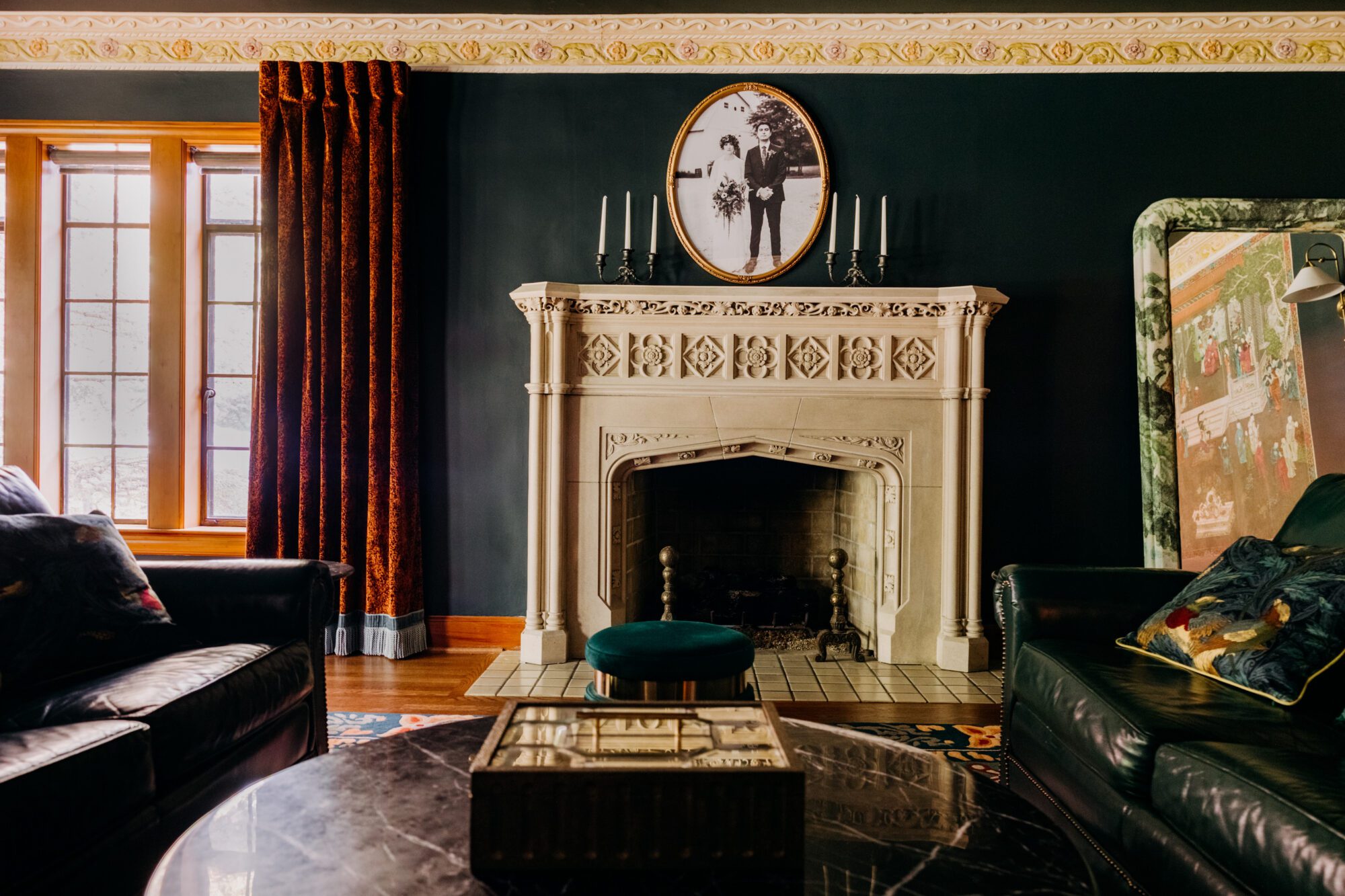
Haley and Simon weren't house hunting with any urgency when they wandered into an open house on a whim. What they found stopped them in their tracks. “We kept telling each other ‘oh my goodness' upon entering each part of the house,” they said, “because we were amazed at how well kept all of the original work was.” Plastered crown molding. A limestone fireplace. Stained glass. Solid wood doors. Even a leather-bound door in the basement. “It had clearly been maintained with a lot of love and care by the previous owner.”
That phrase, stately yet whimsical, is how they describe the house today. It's also, unintentionally, a description of themselves.
Two Styles, One House
Haley and Simon don't share a design background, and they don't share the same aesthetic instincts either. Haley gravitates toward maximalist Victorian style. Simon is drawn to gothic architecture from Belgium, the intricate mosques of Iran, and mid-century design. On paper, that's three or four different houses.
Their answer wasn't to compromise down to something neutral. It was to let the house make the call. “We mostly let the house guide us,” they explained. “The Tudor Revival style is inherently whimsical, a 1930's romanticized version of Medieval English architecture. One could find a little bit of everything we like in the house.” That's the quiet trick behind a project like this. When two people bring genuinely different tastes to the table, the house itself can become the third opinion in the room, the thing everyone agrees to build around.
It helps that both of them come from more artistic backgrounds than their resumes suggest. Haley drew and painted as a medical student. Simon played violin and originally considered industrial design before choosing engineering. “While we like our STEM-driven careers,” they said, “we both grew up loving art.” The house didn't ask them to become different people. It just gave the artistic side of them somewhere to live.
The Pieces That Made It Theirs
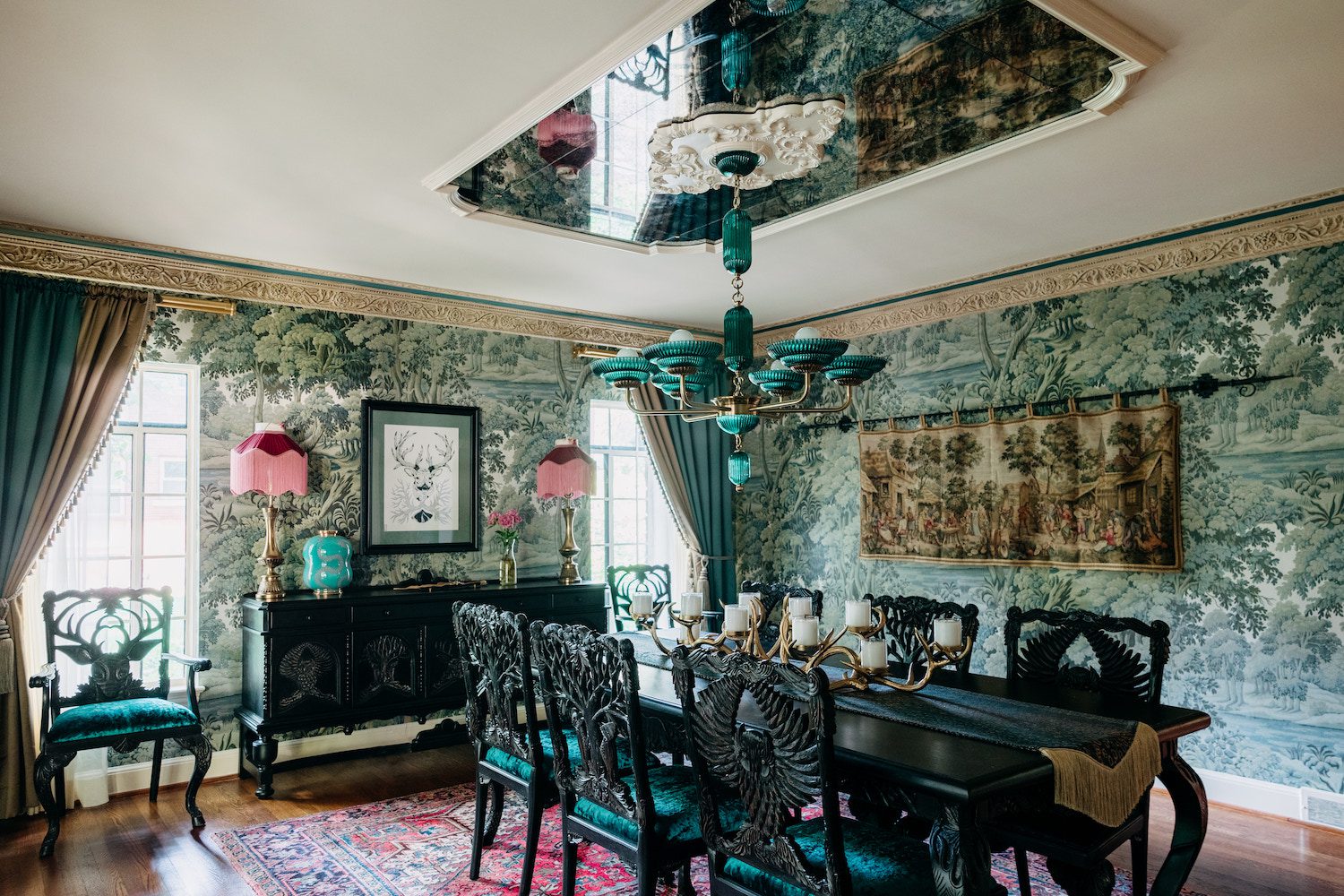
Ask Simon about the Flemish tapestry hanging in the dining room and you get a story that goes back generations, not just to a showroom floor. “My Belgian grandmother gifted us the Flemish tapestry after we bought the house,” he said. The scene is inspired by the work of David Teniers the Younger, a 17th-century Flemish painter, and it hung in his grandmother's own dining room in Belgium for as long as Simon can remember, on a twisted iron rod made by a local blacksmith. “Growing up I remember eating dinner at the table in Belgium while trying to make up a backstory for each villager in the tapestry's scene.”
When it came time to hang it in Detroit, there was only one right way to do it. A local blacksmith, Smith Shop, forged a matching iron rod by hand. “Partly for nostalgia,” Simon said, “and partly to visualize my connection back to Belgium.”
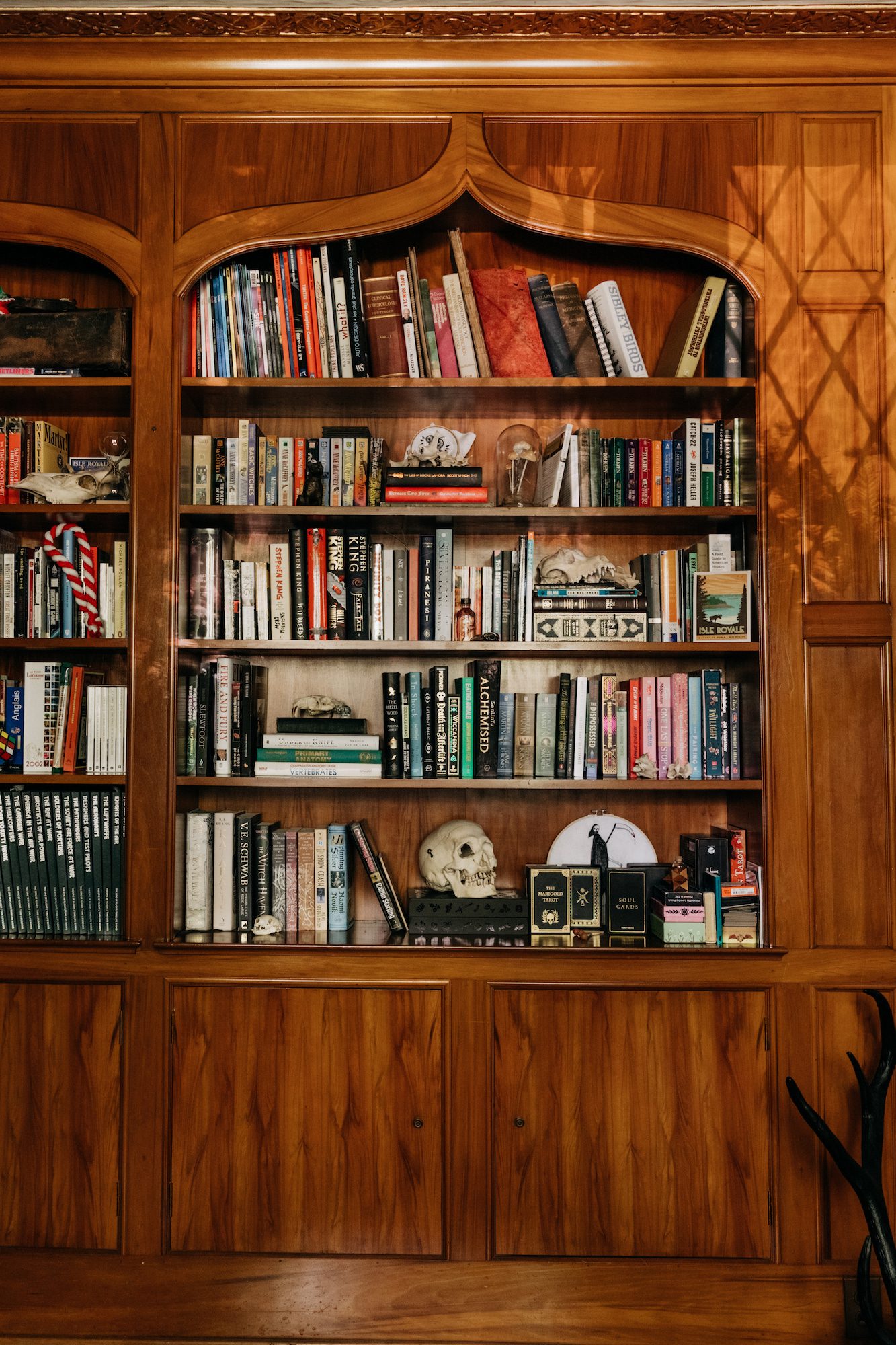
Then there's the collection that gives the house its edge. Haley found most of the animal skulls and bones herself, on walks through the woods, cleaning each one up by hand. A diaphonized mouse came from an oddities exposition. And the human skull, the one guests inevitably ask about, belonged to her uncle, used during his training as an oral surgery resident. Science, curiosity, and a little bit of family history, all sitting on the same shelf.
Trust, Tested Early
Haley and Simon didn't come into this project looking for something safe. “I knew Concetti wasn't afraid to go big after seeing some maximalist work in Concetti's portfolio,” Haley said. But knowing a firm can go big and trusting them to do it in your own home are two different things. That trust solidified early, when the first renderings for the dressing room came back. “We knew Concetti saw us,” they said, “when we saw the first three rendered options for the dressing room and loved all three.”
Now that they're living in it, the verification has come from the people who know them best. “Our friends have stated that the interior design is on brand for us,” they said. Simon admits the house surprised even him. “I think people would be surprised how tech-lite the house is after reading my tech-heavy resume.” Haley, on the other hand, isn't surprised at all. “Laryngologists tend to lean toward the artistic side, so I think this house is totally what someone would expect.”
The Advice They'd Give
If there's a single line from this project worth carrying into your own home, it's the one Simon offered when asked what he'd tell someone afraid to be this bold in their own space. “You already have a lot to stress out about in this world,” he said. “Make your home a sanctuary. That starts by making it a place that reflects who you are.”
That's the whole philosophy, in one sentence, from the client instead of the designer. At Concetti, we create space that becomes you. Haley and Simon just happened to prove it first.