

We understand how overwhelming interior design can feel. You’re ready to take this step because you want your space to work well, feel good, and look amazing…but getting every detail just right doesn’t happen randomly. It requires intention. A strategy. A process.
At Concetti, we take a uniquely strategic, thorough, and personalized approach to creating space that becomes you. Not only is our human-centric approach fueled by the power of interior design strategy, but it also frees you from the stress and analysis paralysis of the design process while keeping you informed and inspired.
Regardless of your project – a new-build custom home, renovation, multi-family housing, a condo/apartment, or a commercial space – our 3-Phase Process enables us to tailor your project to your specific needs and honor your season of life or business.
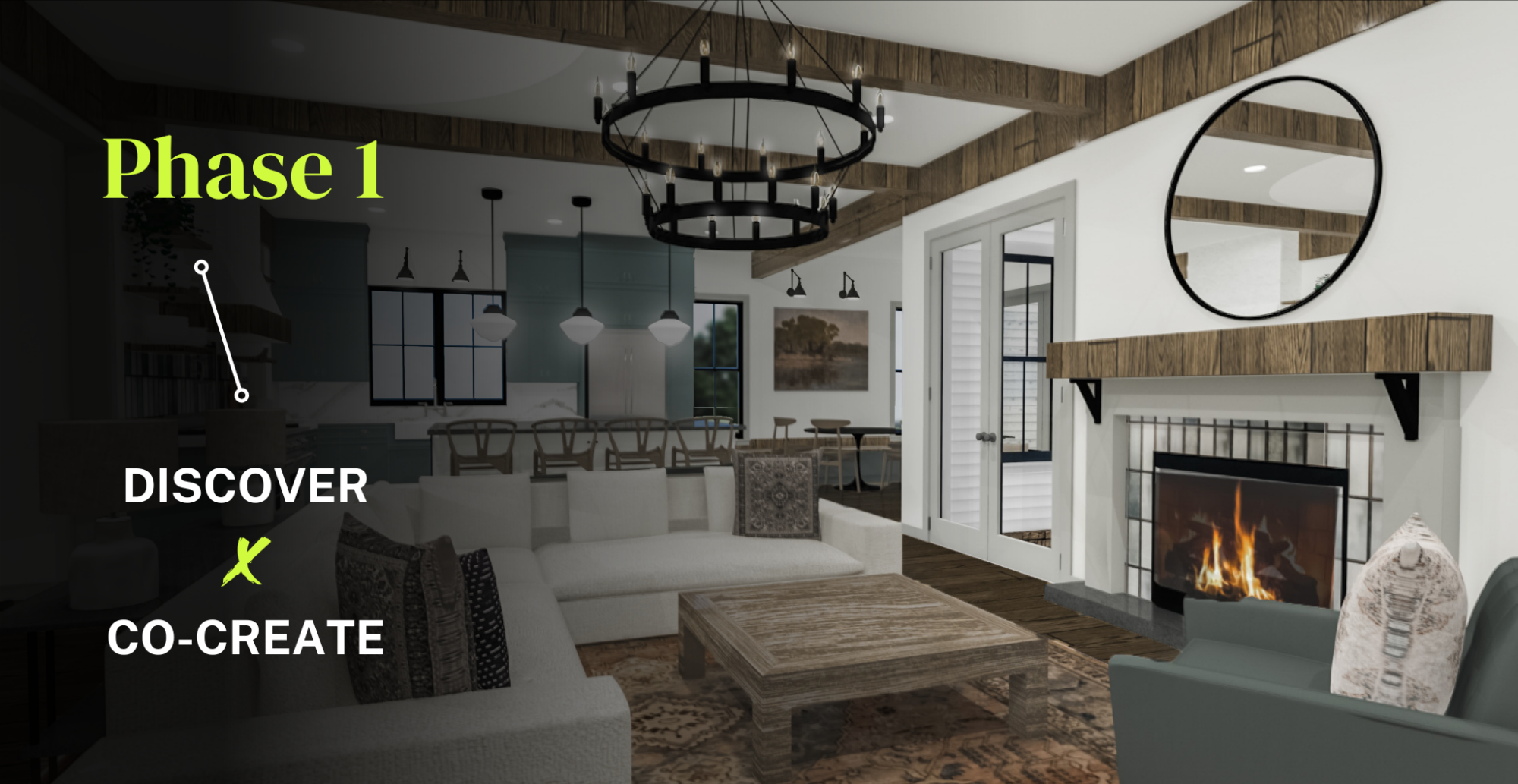
It All Starts with Phase 1
Like any great journey, you have to start somewhere. For us, we start at Phase 1: Discover X Co-Create. The work done in this phase is refreshingly personable, straightforward, and dedicates time to really getting to know you and aligning on the vision for your space. It’s a step that is oddly often missing in our world, but we can’t imagine any other way because it’s so critical to unlock a shared vision.
Phase 1 is where interior design strategy shines the brightest and sets Concetti apart from other interior design professionals. It marries the creative right side of the brain with the tactical, analytical left side of the brain. After all, interior design strategy isn’t just about creating a pretty space.
Phase 1 is designed to help you identify your personal or your brand’s style, needs, and goals and provides the groundwork for the rest of the interior design process. Because of this, you can opt for it as a standalone service – a flexible option if you’re just looking for a holistic vision/prototype or have a tighter budget (because great design should be accessible to all, don’t you think?). Working with us on just Phase 1 can be helpful if you are a…
- Small business owner
- Newlywed or couple discovering how to merge your styles and existing furniture
- DIYer
- Previous client
Previous clients sometimes come to us for just Phase 1 because our prior collaboration on all three Phases helped boost their design confidence and knowledge and they saw how we source materials, communicate with builders, and style spaces. For example, after collaborating with Ashley on New Nautical, she initiated Phase 1 to kick off her family’s recent home addition.
Whether you’re a homeowner with a growing family like Ashley, a bachelor or bachelorette in an apartment, a business owner ready to elevate your brand, or someone in between, Phase 1 informs our strategic interior design solutions to your unique needs.
Now that you have a general feel for Phase 1, let’s dive a little deeper. Each phase in our process includes two steps. Read on to learn about Phase 1: Discover and Co-Create.
Discover
Like we alluded to earlier, our process starts by handing you the mic. In Discover, we ask all kinds of questions and listen intently. Whether it’s hearing the stories behind your most cherished items or immersing ourselves in your business's branding, messaging, and overall strategy – this step is all about YOU.
The Discover stage looks a little different depending on residential or commercial needs. Getting to know you as a residential client means learning your design style, likes and dislikes, who you are as a person, your lifestyle and hobbies, how you want to use your space, what problems you want to solve, and more.
On the other hand, our Discover goal in commercial projects is getting to know your brand. Commercial interior design strategy is more than just designing your space – it’s about being the bridge between your brand and the built environment. Oftentimes, this step helps brands get clearer and more confident about their own brand identity and sometimes sparks the development of brand guidelines that may not have been created otherwise. We do this through several exercises:
- Help you identify your brand crushes. This doesn’t strictly mean identifying brands in your industry you’re looking to mirror. It can also mean selecting characteristics of brands way outside of your industry that you’d like woven into your brand. For example, the sleekness and innovation of Apple or the eclectic chicness of Anthropologie.
- Take a brand archetype quiz to help you discover your business’ personality and unlock your potential to build an irresistible brand.
- Journey mapping, an exercise that illustrates the entire journey your customer and employees will take in your space from the moment they enter to the time they leave. It provides insight into how they interact with your space at various touchpoints and highlights pain points and opportunities to enhance their experience.
Your answers to these questions help us collaboratively establish clear functional, aesthetic, and experiential goals that will dictate everything from how your space will look, how it will perform, how it will make you feel, and even how it will smell!
Following the highly detailed data dump, we begin documenting your wants, needs, goals and persona into Programming Notes. Going back to our human-centric design approach, we assign a persona because the goal is to create space that becomes you or your brand. We even apply this same thinking for multi-family housing, but instead assign the persona to the building rather than the client. Crafting a persona for the building assures that our design is not a one-size-fits-all approach – we’re designing specifically for the tenants you want to attract. Multi-family housing personas also help us highlight the building's inherent character and historical context, enabling us to select materials that harmonize with and enhance the space.
Learn more: The Concetti 3-Step Process: Designing for People vs. Personas
From there, we offer solutions to your pain points and begin identifying aesthetic goals with the help of Visual Guidelines – inspirational images that illustrate your vision. These materials, combined with an existing floor plan, give us what we need to create 3D renderings that get explored in Co-Create.
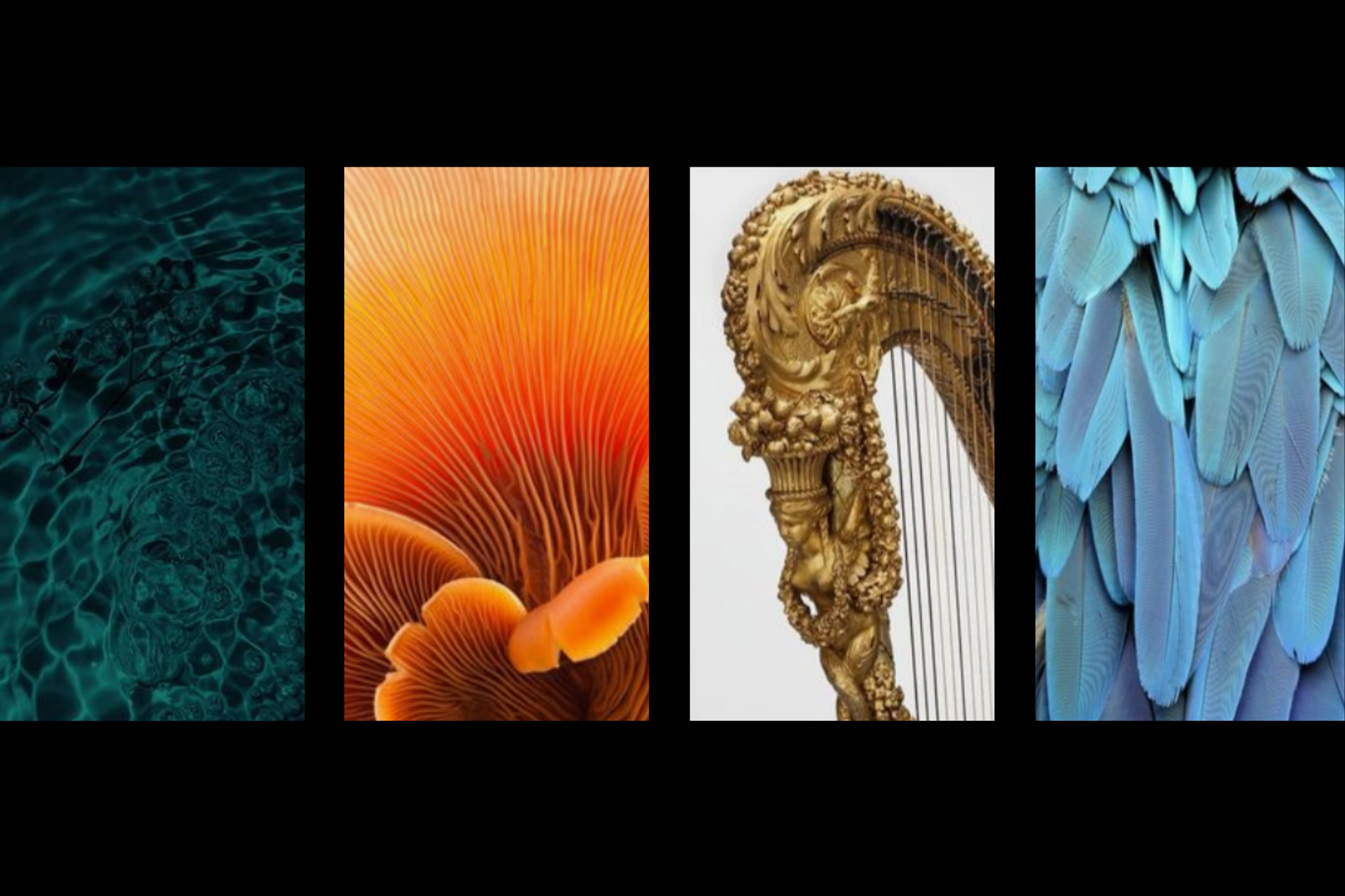
Snippets of the Visual Guideline from Teal Appeal in Grosse Ile.
While having a vision in our minds is a great start, documentation like Programming Notes and Visual Guidelines physically capture your vision and spark action. They’re a hub of consolidated thoughts, concepts, color schemes, and atmospheres. They unite verbal communication and visual representation, reinforce our shared understanding, and your confidence in our direction. This upfront work of getting to know you, your space, and your goals puts us in a position to create design solutions that are unique to you or your business…without them, we’d just be guessing!
When Discover is finished, you get a gift that keeps on giving. The investment you make in your vision does not expire. Trends come and go, but clarity on yourself or brand, your style, and a sense of fulfillment in your space is timeless.
Now, let’s Co-Create!
Co-Create
The goals we developed during our Discover phase are foundational to our success in the Co-Create stage. By agreeing to a clear understanding of your style, the potential of your space, and your needs, we can get down to business!
We meet you in Co-Create phase with a series of 3D renderings informed by the work we did in Discover. The renderings help you visualize the full potential of your space, with plenty of options and variations that address your unique needs. While some 3D renderings align very closely with your Visual Guidelines, others are more like custom blends of your favorite inspirational images that bring together an assortment of your favorite elements.
We call this part of Phase 1 “Co-Create” because your participation is vital here. While you’ll likely gravitate toward the general feel of one or two renderings, we encourage you to eliminate any features you’re not absolutely in love with and tell us if there are any elements from other renderings you’d like to see in their place. Plus, your transparency helps us achieve the goal of Co-Create, which is to give you complete confidence in the layout, function, and aesthetic of your space.
Your feedback, ideas, opinions, and vision are what we need to walk away with a final, realistic 3D rendering of your future space. When Co-Create is complete, we have a clear layout that allows us to write out a shopping list for selections (and gear up for the next phase!).
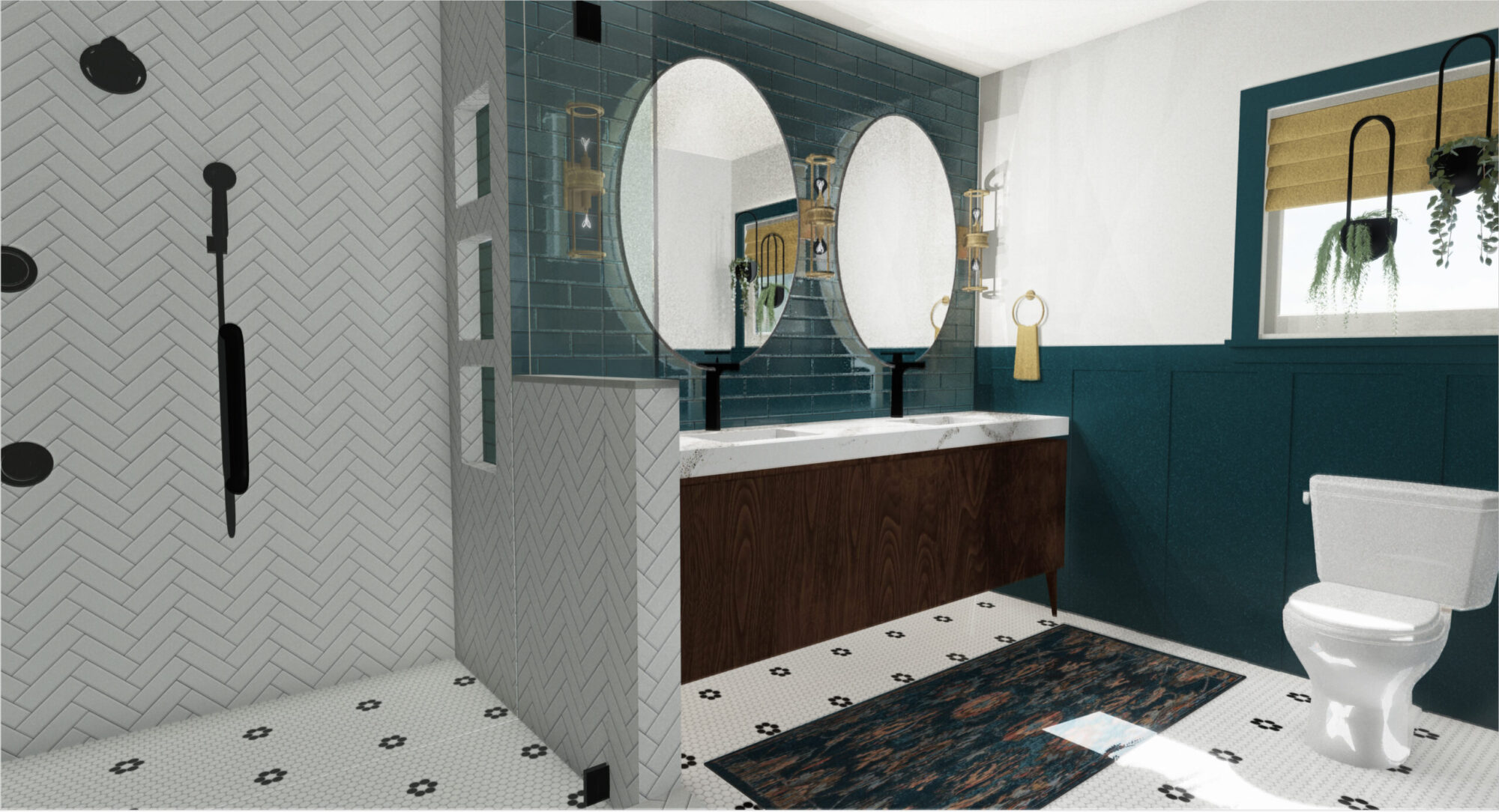
Final 3D rendering from Teal Appeal in Grosse Ile’s primary bath.
Stay Tuned for Phase 2
Thanks to all the strategy and intention established in Phase 1, we achieve a clear vision and a 3D rendering that maps out exactly what to look for when sourcing the pieces to fill your space. Stay tuned in the coming weeks as we explore the phase that’s packed with personalization and communication – Phase 2: Personalize X Translate.